


















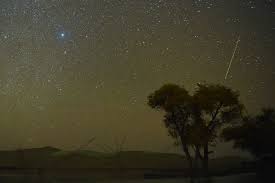
Explore the latest developments concerning The Orionid meteor.
The Orionid meteor shower is peaking this week. Here’s what to know
Sky-gazers worldwide will see a brilliant celestial display this week as the Orionid meteor shower peppers the sky in bright trails of light.
The meteor shower, which is occasionally known to produce fireballs, is set to peak at 8 p.m. ET Monday, according to EarthSky.
The Orionids donât have a sharp peak, âso if you happen to get clouded out on that night, donât despair,â said Robert Lunsford, fireball report coordinator for the American Meteor Society. âHead on out the next night, next couple nights even, and youâll see almost the same activity.â
This year, the Orionids peak at the same time as a new moon, when the dark side of the satellite is facing Earth, according to The Old Farmerâs Almanac, so the bright meteors wonât be competing with moonlight.
See shooting stars from Halley's Comet tonight. Why conditions are perfect for autumn’s top meteor shower
Step outside and observe the Orionid meteor shower tonight and you'll witness one of autumn's best meteor showers at its peak.
Tonight and tomorrow night, 20/21 October, is the best time to see the 2025 Orionid meteor shower, as the shower reaches peak activity this evening and into the early hours of Sunday.
The Orionids occur every year from 2 October – 7 November just as the nights are beginning to get longer and darker, and are one of the best autumn meteor showers.
In 2025, the shower's peak is expected at 13:00 BST (12:00 UT) on 21 October, which makes the nights of 20/21 and 21/22 October the best for spotting them.
VEVOR Red Light Therapy for Whole Body Dual-Chip LEDS Pulse Red 660nm Near Infrared 850nm Light Therapy Panel for Pain Relief

Viewing the Orionid Meteor Shower in 2025
Each October, Earth passes through the inbound debris stream of Halley’s Comet, producing the annual Orionid Meteor Shower. The outbound portion of this same debris trail brings us the Eta Aquariid shower each spring.
Orionid activity begins in early October, but it’s not until mid-month that Earth encounters the densest part of the stream. The shower is typically of medium strength, producing 15–20 meteors per hour at maximum under dark skies. On rare occasions, rates have tripled — though such enhanced activity is not expected this year. Still, as always, only careful observation will reveal what 2025 has in store.
This illustration of debris from Halley’s Comet orbiting the sun is provided by Dr. Peter Jenniskens, SETI Institute/NASA/Ames Research Center.

0 Comments