


















Explore the latest developments concerning The Air Force.
The Air Force F-22 Raptor Has a Combat Range of About 590 Nautical Miles. China's J-20 Is Estimated at Around 1,100. New Stealth Fuel Tanks Take the Raptor to 850.
A clean F-22 Raptor has a combat range of about 590 nautical miles, less than the Su-57’s 670 or the J-20’s 1,100, and it never got the IRST cut in 1991. March photos show the fix: stealth drop tanks good for 850 nautical miles and blended sensor pods to carry the Raptor to the F-47.
Summary and Key Points: The Raptor lost its planned IRST to post-1991 budget cuts, leaving it unable to find ground targets through the War on Terror while the Su-57 and J-20 got IRST from the start. A clean F-22 reaches about 590 nautical miles; Lockheed Martin says the new tanks push combat range to 850, bridging to the F-47.
The F-22’s Mysterious New Pods Could Change How It Hunts
Pick the engineering stories that matter and get them in your inbox.
Access expert insights, exclusive content, and a deeper dive into engineering and innovation all with fewer ads or a completely ad-free experience.
Access expert insights, exclusive content, and a deeper dive into engineering and innovation all with fewer ads or a completely ad-free experience.
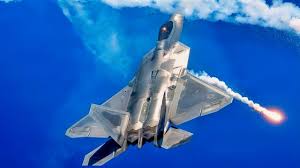
The F-22 is testing mysterious low-observable sensor pods that could provide passive infrared or electro-optical detection, giving the Raptor another way to track airborne threats without radar.
The U.S. Air Force is testing an F-22 Raptor with unusual low-observable sensor pods beneath its wings. While the Air Force has not confirmed their exact function, the pods may support infrared or electro-optical sensing, giving the Raptor another way to detect and track airborne threats without relying continuously on radar. New flight testing is examining how these sensors perform during aggressive maneuvers and demanding flight conditions.
Lose yourself in Maze Infinite Puzzle! A maze and puzzle game designed for calm, focused gameplay.

The F-22’s Mysterious New Pods Could Change How It Hunts
The U.S. Air Force is testing an F-22 Raptor with unusual low-observable sensor pods beneath its wings. While the Air Force has not confirmed their exact function, the pods may support infrared or electro-optical sensing, giving the Raptor another way to detect and track airborne threats without relying continuously on radar. New flight testing is examining how these sensors perform during aggressive maneuvers and demanding flight conditions.
Following the latest strike Saturday on Riyadh's King Khalid International Airport, President Trump said the U.S. "may" join the fight against the Iran-backed Houthis.
More than 600,000 customers are without power after Isaias made landfall as a hurricane on the northern Gulf Coast.
For more detailed information, explore updates concerning The Air Force.

0 Comments