


















Explore the latest developments concerning China solves 'century-old.
China solves 'century-old problem' with new analog chip that is 1,000 times faster than high-end Nvidia GPUs
Researchers from Peking University say their resistive random-access memory chip may be capable of speeds 1,000 faster than the Nvidia H100 and AMD Vega 20 GPUs.
When you purchase through links on our site, we may earn an affiliate commission. Here’s how it works.
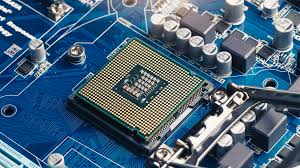
Scientists in China have developed a new chip, with a twist: it's analog, meaning it performs calculations on its own physical circuits rather than via the binary 1s and 0s of standard digital processors.
What’s more, its creators say the new chip is capable of outperforming top-end graphics processing units (GPUs) from Nvidia and AMD by as much as 1,000 times.
Analogue computers could train AI 1000 times faster and cut energy use
Computers built with analogue circuits promise huge speed and efficiency gains over ordinary computers, but normally at the cost of accuracy. Now, an analogue computer designed to carry out calculations that are key to AI training could fix that
Analogue computers that rapidly solve a key type of equation used in training artificial intelligence models could offer a potential solution to the growing energy consumption in data centres caused by the AI boom.
Laptops, smartphones and other familiar devices are known as digital computers, because they store and process data as a series of binary digits, either 0 or 1, and can be programmed to solve a range of problems. In contrast, analogue computers are normally designed to solve just one specific problem. They store and process data using quantities that can vary continuously such as electrical resistance, rather than discrete 0s and 1s.
MIYOO Mini Plus Portable Retro Handheld Game Console V2 Mini+ IPS Screen Classic Video Game Console Linux System Children's Gift

The dynamic landscape of current events often brings forth significant discussions. Monitoring these developments provides crucial insights.


0 Comments