
















Explore the latest developments concerning Scientists Collected Deep-Sea.
Scientists Collected Deep-Sea Rocks. They Spontaneously Caught Fire in The Lab.
Scientists investigating the possibility of a 'gold rush' on the bottom of the ocean have hit upon an unforeseen 'landmine'.
Researchers at the United States Geological Survey (USGS) are now warning that some deep-sea minerals may spontaneously combust when they are brought to the surface.
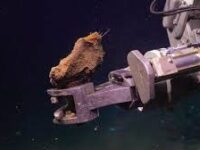
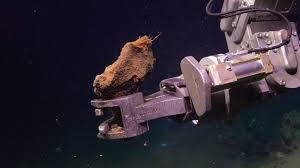
In 2022, that happened to two samples of metal-sulfide rocks collected from the deep seafloor.
The event caused temperatures above 100 °C in the lab and completely oxidized the original samples.
An article on the discovery, published in Scientific Reports, is being shared early, before full editing, to give the public faster access to new research.
According to the USGS, this is a "potential hazard that could merit special consideration if deep-sea mining of seafloor massive sulfide deposits moves forward".
Deep-sea sulfide minerals can spontaneously heat and combust when exposed to air
Official websites use .gov
A .gov website belongs to an official government organization in the United States.
Secure .gov websites use HTTPS
A lock () or https:// means you’ve safely connected to the .gov website. Share sensitive information only on official, secure websites.
Findings from Escanaba Trough, a seafloor spreading center offshore of the Oregon/California border, highlight a potential hazard that could merit special consideration if deep-sea mining of seafloor massive sulfide deposits moves forward.
A new USGS-led study found that some metal sulfide-rich rocks collected from Escanaba Trough, a hydrothermal area along the southern Gorda Ridge off the U.S. West Coast, underwent spontaneous combustion during laboratory processing. The finding identifies a potential hazard that could be important to understand if seafloor massive sulfide deposits are ever mined.
Lose yourself in Maze Infinite Puzzle! A maze and puzzle game designed for calm, focused gameplay.

Escanaba Trough Samples Collected by USGS Reveal Combustion Hazard in SMS Rock Handling
A new USGS-led study found that some metal sulfide-rich rocks collected from Escanaba Trough, a hydrothermal area along the southern Gorda Ridge off the US West Coast, underwent spontaneous combustion during laboratory processing. The finding identifies a potential hazard that could be important to understand if seafloor massive sulfide deposits are ever mined.
Seafloor massive sulfide (SMS) deposits form around hydrothermal vents, where hot fluids circulating through Earth’s crust release metals that precipitate when they encounter colder seawater. These deposits can contain copper, zinc, iron, and other economically important elements and are increasingly being investigated as potential future sources of minerals.
For more detailed information, explore updates concerning Scientists Collected Deep-Sea.

0 Comments