
















Explore the latest developments concerning Science begins for.
Science begins for Smile
On 23 September, the European-Chinese Smile mission was declared ready to start revealing how Earth responds to the wind of charged particles from the Sun. This follows a busy in-space commissioning period since the spacecraft launched on 19 May and reached its target orbit for science operations on 20 June.
A spacecraft never quite behaves the same in space as it does on the ground. Between 20 June and now, European and Chinese teams have been getting Smile ready – including deploying mechanisms, switching on units, checking all communications between the spacecraft and the ground, and fixing any issues that came up.
“The Smile mission is a testament to the trust built between our teams, their dedication to excellence and their determination to find solutions whatever the challenge,” says Professor Carole Mundell, ESA Director of Science. " Smile is now approved to begin science operations. This is a very important milestone – a true pleasure to announce – and I am sure our excellent collaboration will deliver ground-breaking data to scientists around the world.”
Vocabulary Builder – Learning: Master 19000+ English words with Tinder-style swipe learning, 4 quiz types, and smart spaced repetition. GRE, TOEFL, IELTS & SAT prep included!

SMILE Satellite Ends 18-Year Northern Lights Gap; X-Ray Magnetic Shield View Weeks Away
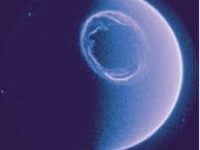
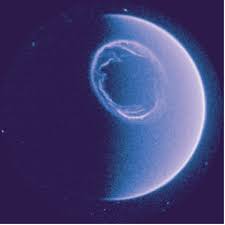
The European-Chinese SMILE satellite released its first scientific images on September 30, 2026, and the results confirm two things at once: one historic milestone already delivered, and an even bigger one still weeks away. The spacecraft's ultraviolet camera has already captured the auroral ring since 2008 — the first continuous panoramic view of the Northern Hemisphere's full auroral ring in 18 years, now closed. But the announcement that Earth's magnetic shield has been "imaged in X-rays for the first time" is premature: the satellite's X-ray camera, although functional, currently captures too much stray earthshine when pointed toward Earth, and engineers from ESA and the Chinese Academy of Sciences (CAS) expect to produce the first good X-ray view of the magnetopause — the boundary where the solar wind meets Earth's magnetic field — sometime around mid-October.
For more detailed information, explore updates concerning Science begins for.

0 Comments