



















Explore the latest developments concerning Dependence on AI.
Dependence on AI makes human brains less nimble, MIT professor says
This material may not be published, broadcast, rewritten, or redistributed. ©2026 FOX News Network, LLC. All rights reserved. Quotes displayed in real-time or delayed by at least 15 minutes. Market data provided by Factset. Powered and implemented by FactSet Digital Solutions. Legal Statement. Mutual Fund and ETF data provided by LSEG.
Overreliance on artificial intelligence tools is making humans less capable of thinking through problems, remembering concepts and forming meaningful social bonds with other people, MIT Professor Eric So argues in his new book.
NASDAQ futures were down about 1.3% before the market opened Thursday, thanks to artificial intelligence stocks taking a steep dive and a hot inflation report.
Q&A: The “collision” between AI, your brain, and society
Images for download on the MIT News office website are made available to non-commercial entities, press and the general public under a
Creative Commons Attribution Non-Commercial No Derivatives license.
You may not alter the images provided, other than to crop them to size. A credit line must be used when reproducing images; if one is not provided
below, credit the images to "MIT."
As artificial intelligence use becomes more widespread, scholars are working to understand its effects on the people who use it. MIT Professor Eric So offers one of the most complete syntheses yet, in his new book, “The Collision: What AI Does to Us,” published this month by W.W. Norton. Recognizing that AI offers opportunities to complete work faster, and in some cases has been turned into useful domain-specific tools, So nonetheless looks at the costs of relying on it too broadly. He contends that heavy use of AI can lead to a kind of cognitive atrophy, in which people fail to develop and retain essential thinking skills. In general, he says, evidence shows that our ability to learn gets dramatically better when we wrestle with material, work through initial failures, keep iterating, and in the process acquire better thinking skills while retaining more knowledge.
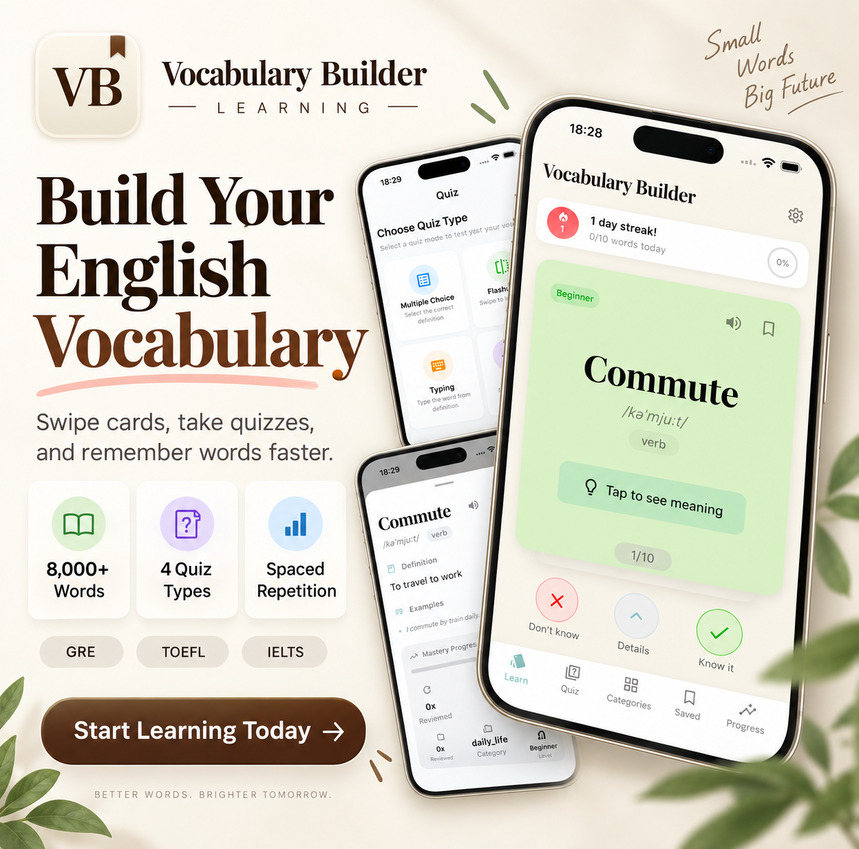
Vocabulary Builder – Learning: Master 19000+ English words with Tinder-style swipe learning, 4 quiz types, and smart spaced repetition. GRE, TOEFL, IELTS & SAT prep included!
Is AI making us dumber? Depends how it’s used
Our learned skills can fade if we rely too much on AI, scientists say. To keep skills or learn new ones, we need to keep our brains engaged.
This is a human-written story voiced by AI. Got feedback?
Take our survey .
(See our AI policy
here .)
AI today can write our class essays, plan our meals and draft our emails. But not everyone agrees on whether this type of help is good or bad. Recent headlines have warned that artificial intelligence will not just make us lazy and stupid; they’ve suggested AI could lead to the downfall of civilization. But the truth may lie somewhere in the middle of those best- and worst-case scenarios, says Trent Cash. He’s a behavioral scientist at University of Waterloo in Canada.
For more detailed information, explore updates concerning Dependence on AI.

0 Comments