


















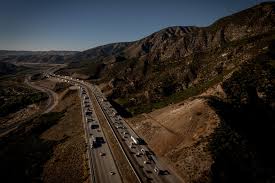
Explore the latest developments concerning The San Andreas.
The San Andreas fault has gone ominously silent. Scientists fear when it finally snaps
This is read by an automated voice. Please report any issues or inconsistencies here.
See more from the L.A. Times in Google Search. Set us as preferred
It lurks ominously beneath California’s many natural wonders, a reminder that nothing in this landscape is truly permanent.
It’s been described as “the mother of all earthquake faults,” the source of both our geological birth and, perhaps, our ultimate undoing.
But the most unnerving thing about the San Andreas fault these days may be its silence. It’s a mystery scientists are still trying to unlock.
The San Andreas is central to any discussion of California. It’s the massive 800-mile spine of the state, trundling up the Coachella Valley to the San Gabriel Mountains, and pushing along the edge of Silicon Valley to beyond the Golden Gate.
2 in 1 Ipl Laser Tattoo Remov Laser Machie 2025 NEW CE Certified OPT ND YAG Laser Hair Remover Machine

Southern California Earthquake Cluster Hits as San Andreas Stress Reaches Millennium High
A Pacific M6.3 and a pair of Southern California M4-class earthquakes arrived within hours of each other Monday, landing in a fault system that a peer-reviewed study published last month identified as carrying tectonic stress at its highest modeled level in 1,000 years. No casualties were reported in any of the events. But for the roughly 20 million people living in Southern California's earthquake corridor, the timing matters: the same fault junction that researchers now call an "earthquake gate" runs directly through the region where Monday's tremors occurred.
The Loyalty Islands M6.3 — the largest single event of the day — struck southeast of the French Pacific territory of New Caledonia at 10:45 a.m. ET Monday (14:45 UTC). The Kern County M4.3 followed at 12:40 p.m. ET (9:40 a.m. PT) near Johannesburg, about 120 miles east of Bakersfield. Both came less than 36 hours after a M4.1 rattled the Frazier Park area of Kern County early Sunday morning, generating 774 citizen reports to the U.S. Geological Survey's "Did You Feel It?" system and prompting seismologists to rule out the San Andreas and Garlock faults in favor of a smaller, lesser-known structure called the Pleito Fault.
For more detailed information, explore updates concerning The San Andreas.

0 Comments